
Cognitive Brain Exercises to Boost Memory and Focus in Children

Every parent wants their child to thrive, not only socially and physically, but cognitively as well. Across California, families are increasingly searching for practical ways to support memory, attention, and learning in children, especially as digital distractions become part of everyday life. This growing interest has placed cognitive brain exercises in California at the center of conversations about early learning and child development.
The idea is simple but powerful. When children regularly engage in targeted mental activities, they strengthen attention, improve memory, and build skills that support learning both inside and outside the classroom. Even better, these exercises can feel like games rather than work, making them easier to incorporate into daily routines.
In this guide, you will learn what cognitive brain exercises are, why they matter, and how to use them effectively at home and in school. You will also discover supportive resources available to families throughout California that help children build strong cognitive foundations early in life.
What Are Cognitive Brain Exercises and Why They Matter
Understanding Cognitive Brain Exercises
Cognitive brain exercises are structured activities designed to stimulate key brain functions such as memory, attention, reasoning, and executive control. These exercises take advantage of neuroplasticity, the brain’s ability to form new connections and adapt through experience. In children, whose brains are still rapidly developing, this adaptability creates an ideal window for strengthening cognitive skills.
Examples include memory games, problem-solving tasks, sequencing activities, and focus-based challenges. When practiced consistently, these exercises help children process information more efficiently and improve their ability to concentrate.
Key Benefits for Children
Regular cognitive stimulation offers several benefits:
- Stronger short-term and long-term memory
- Improved attention span and focus
- Better problem-solving and reasoning skills
- Increased academic confidence
- Greater flexibility in thinking
For many families, early awareness is an important first step. Services such as developmental screenings can help identify areas where children may benefit from targeted cognitive support before challenges become more pronounced.
Top Cognitive Brain Exercises to Boost Memory and Focus
Below are practical, age-appropriate exercises that families across California can use to support learning and attention.
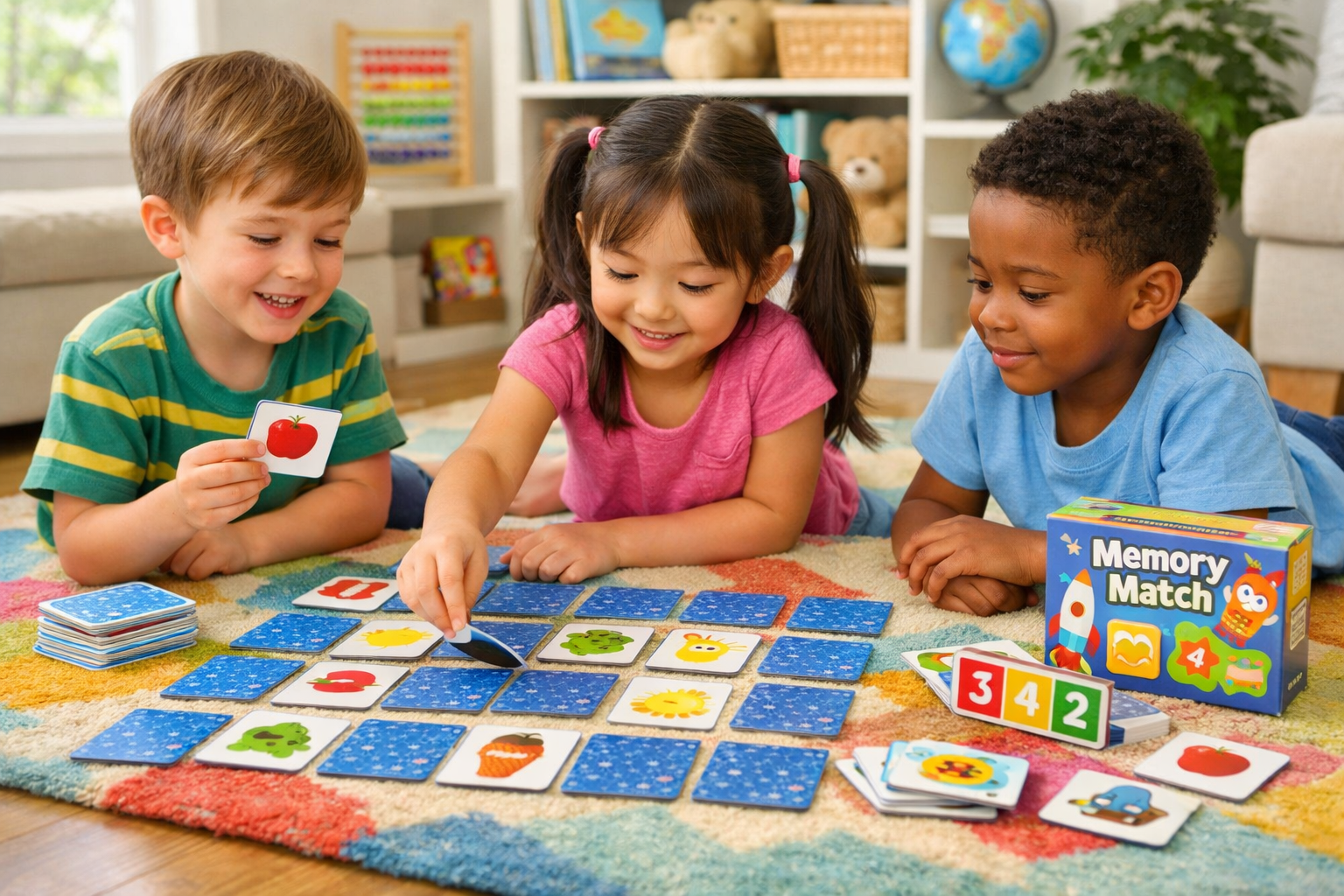
Memory Match Card Game
This classic activity strengthens visual memory and recall. Cards are placed face down, and children flip two at a time to find matching pairs.
Why it helps: It trains memory retrieval and concentration while remaining playful and engaging.
Tip: Use themed cards, such as animals or letters, to reinforce learning goals.
“Simon Says” for Attention Control
This interactive game requires children to listen carefully and respond only when specific cues are given.
Why it helps: It builds selective attention, impulse control, and listening skills.
Variation: Add multi-step commands to increase difficulty for older children.
Story Recall and Retelling
Reading a short story and asking children to retell key events helps develop working memory and sequencing skills.
Why it helps: It strengthens comprehension and the ability to organize information.
Extension: Ask children how characters felt or why events happened to deepen cognitive engagement.
Puzzle and Logic Games
Jigsaw puzzles, mazes, and logic challenges encourage problem-solving and sustained focus.
Why it helps: These activities develop spatial reasoning, persistence, and planning skills.
Best practice: Choose puzzles that are challenging but not frustrating.
Memory Chain Game
In this verbal game, players add items to a growing list and repeat the sequence in order.
Why it helps: It strengthens sequential memory and attention to detail.
Example: “Apple,” then “apple, ball,” then “apple, ball, cat,” and so on.
Focused Breathing and Mindfulness
Simple breathing exercises help children calm their minds and improve attention regulation.
Why it helps: Reduces mental overload and supports emotional regulation.
How to do it: Slow breathing for a few minutes before homework or bedtime.
Practical Ways to Use Cognitive Exercises at Home and School
At Home
Parents can integrate cognitive brain exercises into everyday routines without adding stress.
- Use short memory games as a morning warm-up
- Add a puzzle break before homework
- Rotate activities during family game nights
For families with younger children, early intervention programs such as Early Start services for children ages 0–3 can provide guidance on age-appropriate cognitive stimulation.
In School and Learning Environments
Teachers and caregivers can use cognitive exercises as:
- Transition activities between lessons
- Small-group learning tools
- Focus resets during long school days
Families navigating school or service systems may also benefit from navigation services that help connect children to appropriate developmental and educational resources in California.
Supporting Cognitive Development Through Early Identification
Cognitive challenges are easier to address when identified early. Tools that assess attention, memory, and learning readiness can guide parents toward the right support.
Resources such as child assessment tools used in California help families understand developmental milestones and recognize when additional cognitive skills training may be helpful.
For families needing structured assistance, regional center intake assistance can support access to services designed for children with developmental needs.
Tips for Making Cognitive Exercises Effective
To get the most benefit from cognitive brain exercises:
- Keep sessions short and consistent
- Rotate activities to stimulate different skills
- Celebrate effort rather than perfection
- Present exercises as games, not tasks
Programs that combine skill-building with encouragement, such as the Navigators to Leaders program, emphasize confidence-building alongside cognitive growth, reinforcing long-term success.
Conclusion
Cognitive brain exercises offer children a practical and engaging way to strengthen memory, focus, and learning skills. For families exploring cognitive brain exercises in California, these activities provide an accessible starting point that supports both academic readiness and everyday functioning.
By incorporating simple exercises into daily routines and leveraging available developmental resources, parents can help children build strong cognitive foundations. Just a few minutes a day can lead to meaningful improvements in attention, confidence, and problem-solving abilities.
With consistency, encouragement, and the right support, cognitive growth becomes not just achievable, but enjoyable for children and families alike.
Frequently Asked Questions About Cognitive Brain Exercises
What age can children start cognitive brain exercises?
Children as young as preschool age can benefit. Activities should be adapted to developmental level and gradually increased in complexity.
How long should sessions last?
Short sessions of 5 to 15 minutes are most effective, especially when practiced consistently.
Do these exercises improve academic performance?
Yes. Improved memory and focus often translate into better classroom engagement and learning outcomes.
Can these exercises help children with attention difficulties?
They can support attention development and self-regulation, though they should complement, not replace, professional support when needed.
How can parents keep children motivated?
Make activities fun, rotate games, and celebrate progress. When learning feels playful, children are more likely to stay engaged.