
What Is Cognitive Brain Training? Techniques, Benefits, and Examples

Understanding Cognitive Brain Training and Why It Matters
When children struggle with focus, memory, problem-solving, or emotional regulation, it can affect nearly every part of their daily lives. School becomes harder, routines feel overwhelming, and frustration builds for both children and parents. Many families notice these challenges early but are unsure what kind of support actually addresses the root of the problem. This is where cognitive brain training in California plays an important role.
Cognitive brain training focuses on strengthening the mental skills that support learning, behavior, and everyday functioning. Rather than concentrating only on academic performance, it works on the underlying cognitive abilities that help children think clearly, adapt to change, and manage emotions. These skills form the foundation for success in school, relationships, and long-term independence.
Across California, cognitive brain training is commonly used within early intervention and developmental support services. When introduced early and delivered in a family-centered way, it can help children build confidence, improve self-regulation, and reduce daily stress for the entire family.
In this guide, you will learn what cognitive brain training is, how it works, and why it is effective. You will also see practical examples and learn how families can access supportive services that promote long-term growth.
What Is Cognitive Brain Training?
Cognitive brain training is a structured approach designed to strengthen core mental processes often referred to as cognitive or executive functioning skills. These skills influence how children pay attention, remember information, solve problems, and regulate behavior.
Unlike tutoring, which focuses on academic content, cognitive brain training targets how the brain processes information. This makes it especially helpful for children with developmental delays, learning differences, or attention challenges.
Cognitive skills commonly addressed include:
- Sustained attention, or the ability to stay focused over time
- Selective attention, which helps children focus on relevant information while ignoring distractions
- Divided attention, the ability to manage more than one task at a time
- Working memory, which allows children to hold and use information briefly
- Inhibitory control, the skill that helps children pause, think, and regulate impulses
Many programs also incorporate cognitive skills training strategies that support planning, emotional regulation, and flexible thinking. In California, these approaches are often embedded within broader developmental services to ensure children receive well-rounded support.
For many families, understanding a child’s strengths and needs begins with developmental screenings, which help identify areas where cognitive support may be beneficial.
Core Cognitive Brain Training Techniques Explained
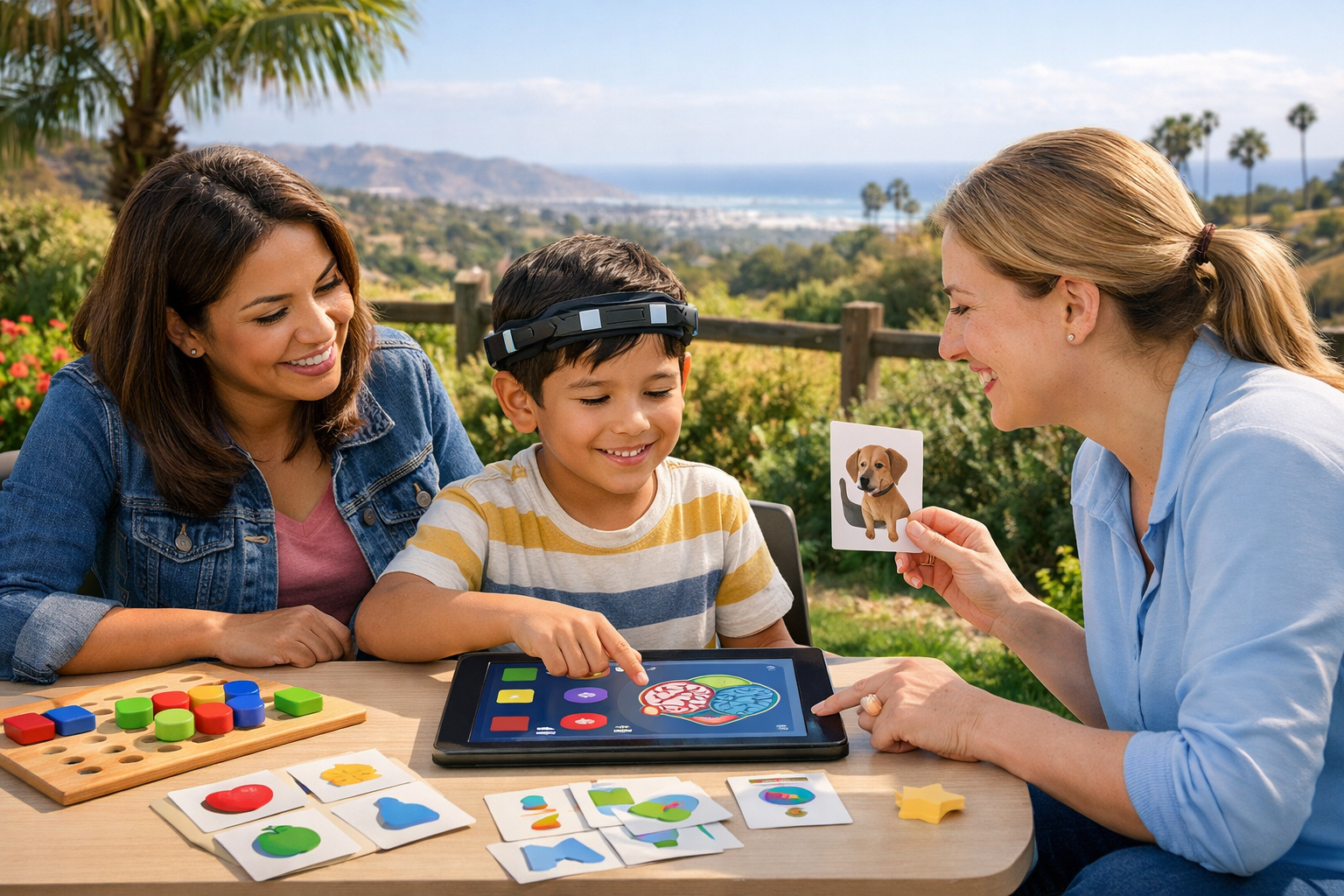
Cognitive brain training uses engaging, structured activities that feel like play while targeting specific mental processes. Training is typically individualized and adjusted as children grow.
Attention-Building Activities
These exercises help children improve focus and task engagement. Activities may include matching games, sequencing tasks, or guided play that gradually increases in complexity. Over time, children develop stronger sustained attention and improved ability to manage distractions.
Memory Strengthening Exercises
Memory-focused activities target both short-term memory and working memory. Tasks may include recall games, pattern repetition, or activities similar to a working memory test, where children practice holding and manipulating information briefly. Stronger memory skills support learning, following directions, and daily routines.
Reaction Time and Processing Speed
Some cognitive training activities focus on response speed and accuracy. Understanding reaction time (the speed at which a child responds to a stimulus) helps therapists design exercises that improve processing efficiency without creating pressure or stress.
Problem-Solving and Reasoning Tasks
These activities encourage children to identify solutions, adjust strategies, and understand cause-and-effect relationships. Strengthening reasoning skills supports academic learning and social interactions.
Emotional Regulation and Self-Control
Cognitive brain training often includes strategies that support emotional awareness and self-regulation. By strengthening inhibitory control, children learn to pause, manage frustration, and respond more thoughtfully to challenges.
Generalizing Skills to Daily Life
A key part of effective training is helping children apply new skills at home, in school, and in social settings. This ensures progress extends beyond structured sessions into real-world situations.
Benefits of Cognitive Brain Training for Children
When implemented consistently, cognitive brain training supports growth across multiple areas of development.
Common benefits include:
- Improved focus and attention
- Stronger memory and learning readiness
- Better emotional regulation
- Increased confidence and independence
- Reduced frustration and behavioral challenges
In California, families often report that cognitive brain training helps children feel more capable and engaged, while caregivers gain practical tools to support progress at home.
Early support is especially impactful. Programs such as Early Start services for children ages 0–3 provide early childhood intervention during critical stages of brain development.
Real-World Examples of Cognitive Brain Training
A preschool-aged child with difficulty focusing may begin cognitive brain training through structured play that targets attention and memory. Over time, improved focus leads to better participation in group activities and smoother transitions between tasks.
School-aged children may work on planning, working memory, and emotional regulation. These skills make it easier to follow instructions, complete assignments, and manage classroom expectations.
Families often benefit from coordinated support that includes guidance and advocacy. Navigation services help families understand options, connect to appropriate programs, and navigate complex systems of care.
For families seeking long-term empowerment and leadership development, programs like the Navigators to Leaders program provide education and support that strengthen both child outcomes and family confidence.
Understanding Assessment and Screening
Cognitive brain training is most effective when guided by accurate assessment. Evaluations may include attention measures, memory tasks, and neuropsychological testing examples that help clarify how a child processes information.
Parents and educators may also benefit from resources such as this behavioral health screening guide for parents and educators in California, which explains how screening tools support early identification and intervention.
For children who may qualify for additional support, regional center intake assistance helps families access evaluations, therapies, and ongoing developmental services throughout California.
Best Practices and Common Misunderstandings
Understanding how cognitive brain training works helps families set realistic expectations.
- Cognitive brain training supports skills, not labels
- Progress is often gradual but meaningful
- Family involvement strengthens results
- Training should be individualized, not generic
- Earlier intervention leads to stronger outcomes
Cognitive brain training works best as part of a supportive, family-centered approach rather than a standalone solution.
Building Strong Thinking Skills for Life
Cognitive brain training helps children strengthen the mental skills they rely on every day. These skills influence learning, behavior, emotional well-being, and long-term independence. When delivered early and reinforced consistently, cognitive training can change a child’s developmental trajectory in meaningful ways.
For families exploring cognitive brain training in California, the first step is gaining clarity and support. With the right guidance, children are not just supported, they are empowered to grow, adapt, and thrive.
Frequently Asked Questions About Cognitive Brain Training
What is cognitive brain training?
It is a structured approach that strengthens attention, memory, problem-solving, and self-regulation skills.
Who benefits from cognitive brain training?
Children with developmental delays, learning differences, or attention challenges often benefit the most.
Is cognitive brain training the same as tutoring?
No. It focuses on how the brain processes information, not academic content.
When should cognitive brain training begin?
As soon as developmental concerns are identified to maximize impact.
Are cognitive brain training programs available in California?
Yes. Many early intervention and community-based services across California include cognitive brain training as part of developmental support.