
Developmental Speech Disorders: Signs, DLD, and Support for Families

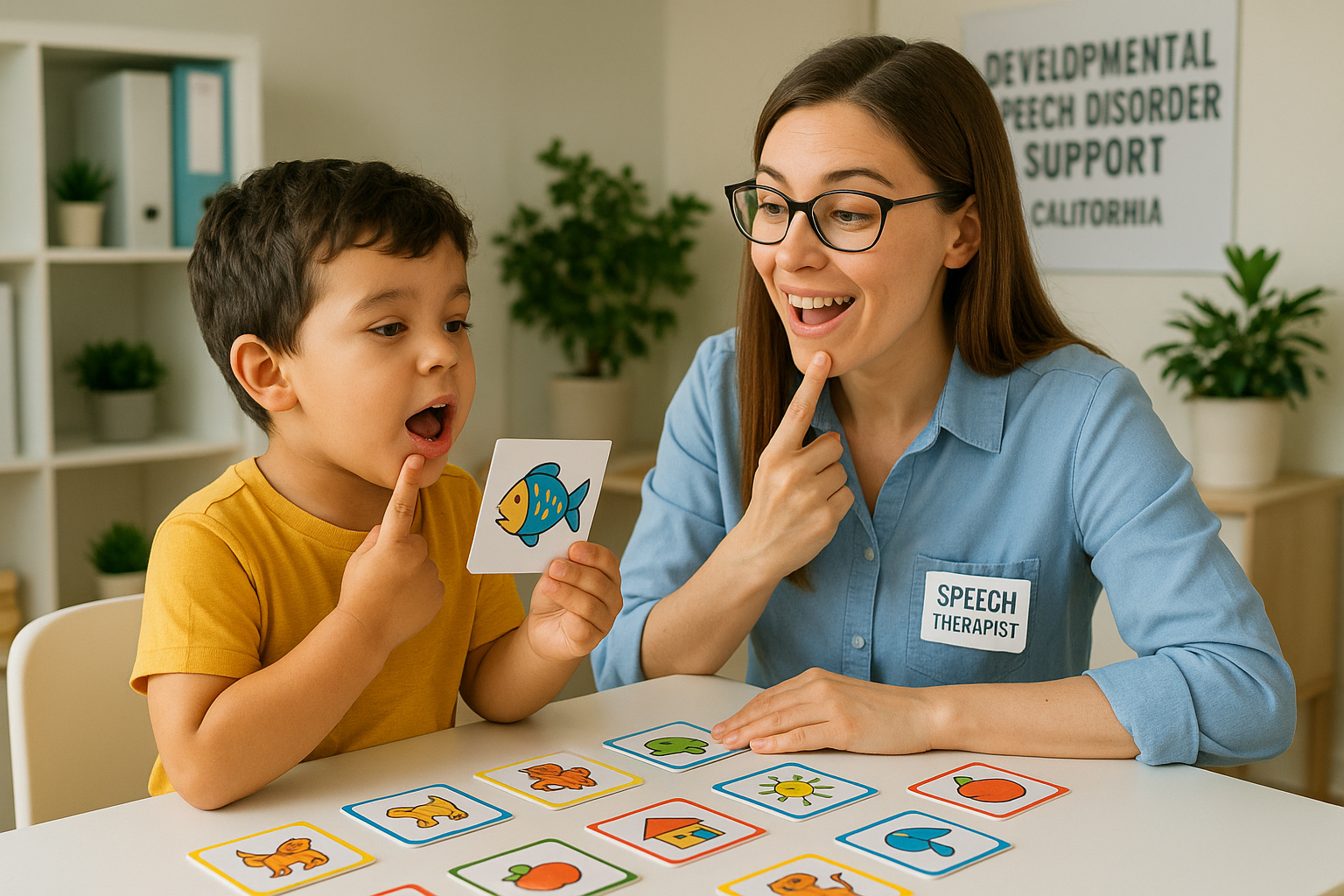
When a child struggles to communicate clearly, parents often feel unsure whether the issue is part of normal development or something more. You might notice unclear speech, difficulty forming words, or frustration when your child is not understood. These experiences are common and can be early signs of developmental speech disorders.
Across California, many families face similar questions. Developmental speech disorders affect how children produce sounds, organize speech, or learn language. Without support, these challenges can influence school readiness, social confidence, and emotional well-being. The good news is that early identification and targeted intervention can make a meaningful difference.
This guide explains what developmental speech disorders are, how they relate to developmental language disorder (DLD), how diagnosis works, and what families can do to support progress at home and through professional services.
What Are Developmental Speech Disorders and Why Do They Matter
Developmental speech disorders involve ongoing difficulties with speech sound production or speech patterns that are not typical for a child’s age. Unlike temporary delays, these challenges usually do not resolve without structured support.
Children with developmental speech disorders may experience:
- Persistent articulation errors beyond age expectations
- Difficulty combining sounds into clear words
- Reduced speech clarity even with familiar listeners
- Frustration or withdrawal during communication
Speech plays a central role in learning, relationships, and independence. When children cannot communicate effectively, it can affect academic progress, behavior, and self-esteem. Early support helps reduce these risks and builds a stronger foundation for future learning.
Families who want early clarity often begin with developmental screenings to identify whether a speech or language concern needs further evaluation.
Developmental Speech Disorders vs Developmental Language Disorder (DLD)
Parents often ask about the difference between speech disorders and language disorders. Understanding this distinction is important.
A developmental speech disorder primarily affects how sounds are produced. This includes articulation and phonological patterns.
Developmental language disorder, often referred to by the medical abbreviation DLD, affects how a child understands and uses language. Parents may ask, what is DLD or what does DLD medical abbreviation mean. DLD refers to a language learning disorder that impacts vocabulary, grammar, and sentence structure even when hearing and intelligence are typical.
Key differences include:
- Speech disorders focus on how words sound
- DLD focuses on how language is understood and organized
- Some children experience both speech and language challenges
This distinction is sometimes described as language disorder vs language difference, which is important for multilingual families. A language difference reflects learning more than one language, while a disorder affects communication across all languages the child uses.
Common Signs Parents Often Notice
Parents are usually the first to recognize concerns. Early signs of developmental speech disorders or related childhood language disorders may include:
- Limited babbling or sound variety as a toddler
- Difficulty imitating sounds or words
- Speech that is hard to understand after age three
- Expressive language problems such as short or incomplete sentences
- Difficulty following directions, which may suggest a language processing disorder
Keeping brief notes about your child’s communication over time can be helpful during evaluations.
What Causes Developmental Speech and Language Disorders
There is rarely a single cause. Factors may include:
- Genetic or family history
- Neurological differences
- Oral-motor coordination challenges
- Hearing issues
- Broader speech and language learning disabilities
In many cases, no clear cause is identified. This does not prevent progress. What matters most is timely support and consistent intervention.
Families with infants and toddlers may benefit from early intervention programs such as Early Start (0–3), which support young children during critical developmental periods.
How Developmental Speech and Language Disorders Are Diagnosed
A comprehensive evaluation by a speech-language pathologist is the standard approach. A DLD diagnosis or speech diagnosis typically includes:
- Standardized assessments
- Play-based observation
- Parent interviews
- Analysis of receptive and expressive language
- Review of speech sound patterns
Professionals look at both speech and language skills to determine whether a child has a speech disorder, a language learning disorder, or both.
Families who need help navigating evaluations and referrals often work with navigation services to coordinate next steps and reduce delays.
Therapy and Support Options That Help Children Improve
Once a diagnosis is made, therapy is tailored to the child’s specific needs. Treatment may include:
- Articulation therapy for speech clarity
- Phonological pattern intervention
- Language therapy for vocabulary and grammar
- Strategies for language processing disorder support
Play-based approaches are common, especially for younger children, and help maintain engagement while building skills.
Children who qualify may receive early intervention or regional center services. Families needing help with applications can access regional center intake assistance for guidance.
How Families Can Support Speech and Language at Home
Family involvement is one of the strongest predictors of success. Simple, consistent strategies make a difference:
- Model slow, clear speech
- Expand your child’s words into short sentences
- Read together daily and talk about pictures
- Practice target sounds during play
- Praise effort, not just accuracy
Parents who want to grow into advocacy roles sometimes explore leadership pathways such as the Navigators to Leaders Program, which builds confidence in supporting children across systems.
Real-World Examples of Progress
Toddlers with speech sound difficulties often show improvement within weeks when therapy and home practice work together. Preschool children with language learning disorders benefit from routines that include rhyming, storytelling, and sound awareness activities that support both communication and early literacy.
California families have access to early intervention, school-based speech services, and community programs that help align support across settings.
Best Practices for Supporting Children with Developmental Speech Disorders
- Integrate speech practice into daily routines
- Maintain open communication with therapists
- Use consistent strategies across home and school
- Celebrate small improvements
- Address concerns early rather than waiting
These practices help children build confidence and communication skills over time.
Supporting Confident Communication Starts Early
Understanding developmental speech disorders allows families to take informed action. With early identification, appropriate therapy, and consistent family support, children can make meaningful progress in speech and language.
California families have access to screening, early intervention, and navigation support through organizations like Families United. Each step, from scheduling a screening to practicing at home, helps children develop the communication skills they need to thrive.
Frequently Asked Questions About Developmental Speech Disorders
How early can developmental speech disorders be identified?
Signs may appear as early as 12 to 18 months. Ongoing concerns by age two or three should be evaluated.
What is the difference between a speech disorder and DLD?
Speech disorders affect sound production. Developmental language disorder affects understanding and using language.
Can children outgrow developmental speech disorders?
True disorders usually require therapy. Early treatment leads to better outcomes.
How long does speech therapy take?
Progress varies, but many children improve within months with consistent support.
How can parents help at home?
Read daily, model clear speech, practice target sounds, and encourage communication in a positive way.