
Shared Journeys: Finding Free Programs for Disabled Adults and Families

Navigating the transition into adulthood can feel overwhelming for families, but there are numerous free programs for disabled adults designed to bridge the gap between isolation and community inclusion. For many parents and caregivers, the greatest fear is the "cliff" that occurs after high school graduation when structured school supports disappear. However, state-funded initiatives and non-profit resources offer a vital safety net, ensuring that your loved one has access to vocational training, social engagement, and essential daily care without the burden of out-of-pocket costs.
The reality is that without these services, many adults with developmental disabilities risk losing the social skills and independence they worked so hard to gain during their school years. These programs matter because they provide the "Style, Comfort, and Protection" of a stable routine, while simultaneously giving caregivers the respite they need to maintain their own well-being. By exploring these resources, you are not just finding a service; you are securing a pathway to a more inclusive and fulfilling future for your family.
In this guide, you will gain a clear understanding of the types of state-funded and community-based support available to you. You’ll learn how to qualify for adult day habilitation, where to find residential assistance, and how to navigate the intake processes that make these services accessible.
Let’s begin by exploring the foundational community resources available to help you build a lifelong network of support.
Understanding the Landscape of Support for Disabled Adults
In practical terms, free programs for disabled adults are state-funded or community-based services designed to provide essential support, vocational training, and social engagement at no cost to the participant or their family. These initiatives function as a vital extension of the social safety net, transitioning individuals from the school-age environment into a structured adult life. Whether it is through a specialized program for disabled adults that focuses on job skills or a wellness-centered community group, the goal is to foster independence while ensuring that financial barriers never stand in the way of a person’s potential.
For families in California, these programs are not just a luxury, they are a necessity for long-term stability and safety. When a student exits the school system, the sudden loss of daily structure can lead to cognitive decline or social withdrawal. By engaging with these resources, families can secure specialized assistance, such as Regional Center intake assistance, to bridge the gap between graduation and adult services. This ensures that adults with developmental disabilities remain active members of their communities, reducing the risk of institutionalization and providing much-needed respite for family caregivers.
Accessing free programs for disabled adults provides several transformative benefits:
- Skill Retention: Participants continue to develop self-care, communication, and social skills in a supportive environment.
- Vocational Growth: Many programs offer pathways to employment through specialized training and job coaching.
- Health and Wellness: Access to nursing care, physical therapy, and nutritious meals through navigation services helps maintain physical well-being.
- Peer Connection: Individuals build meaningful relationships within the "Families United Network," reducing the isolation often felt by adults with disabilities.
A common misconception is that "free" means lower quality or fewer options. In reality, these programs are backed by rigorous state standards and often provide higher levels of specialized care than private-pay alternatives. Understanding this foundation is the first step toward building a comprehensive plan for the future.
Navigating the Best Free Programs for Disabled Adults
Finding the right support system requires moving beyond general searches and understanding the specific categories of aid available through state and federal funding. For many, the journey begins with identifying free programs for disabled adults that match the individual’s specific level of need, whether that involves daytime socialization, vocational training, or 24-hour care. By leveraging navigation services, families can streamline the application process for these essential resources, ensuring that no technical hurdle stands in the way of a loved one’s progress.
Day Programs and Community Integration
When school ends, maintaining a routine is essential for cognitive and social health. Day programs for disabled adults offer a structured environment where individuals can engage in recreational activities, therapy, and social interaction during traditional work hours. These programs are often funded through Medicaid waivers or state developmental departments, making them accessible to families across various socioeconomic backgrounds.
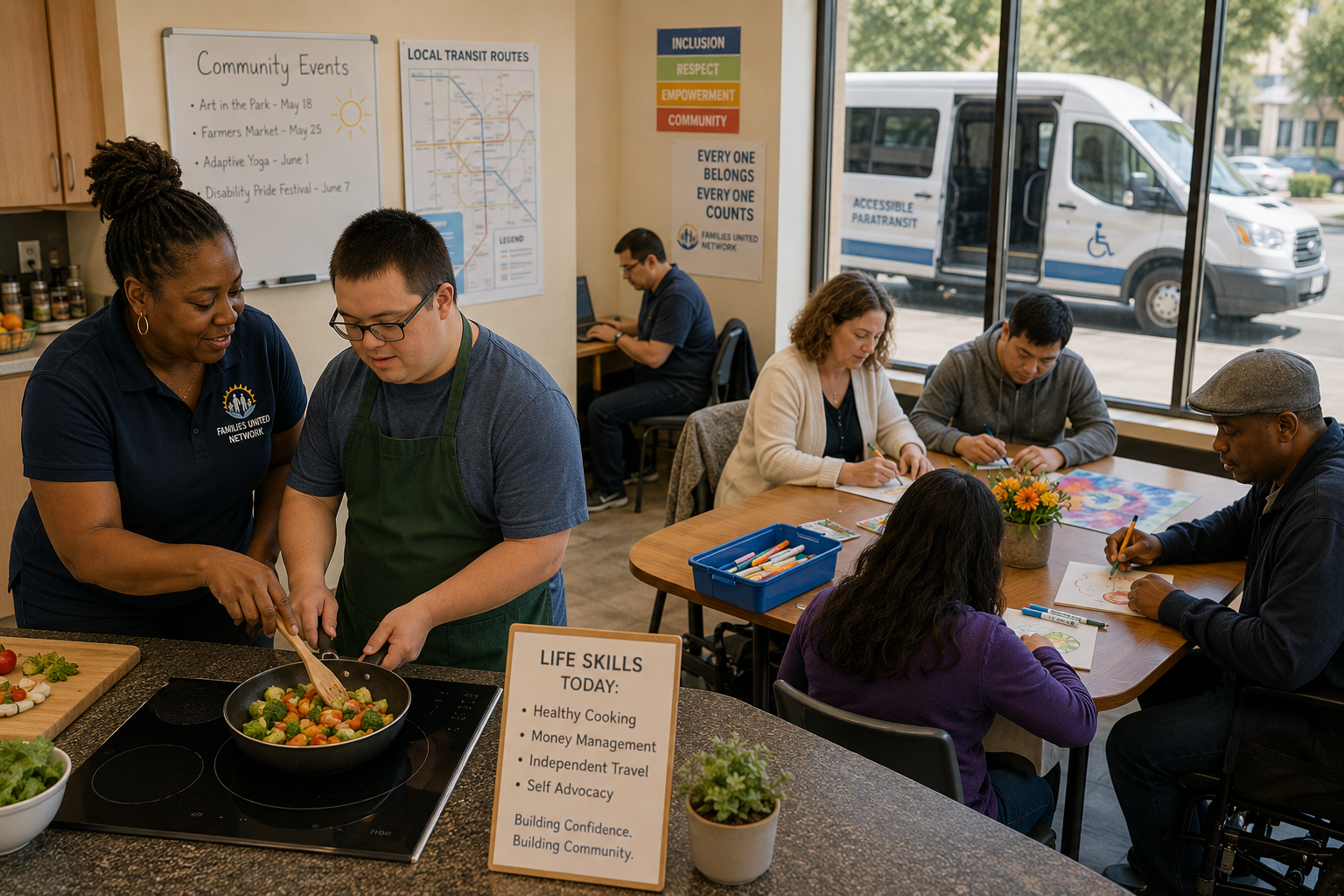
One specialized version of this is adult day habilitation. Unlike a general social club, habilitation programs focus on teaching and maintaining the life skills necessary for independence. This includes everything from managing personal hygiene to learning how to use public transit. These programs are vital for preventing social isolation and ensuring that adults with disabilities continue to thrive in a community-centered environment.
Residential and Living Support
For individuals who require more intensive support than what can be provided at home, residential homes for disabled adults provide a safe, community-integrated living solution. These homes are typically small-scale facilities, often located in standard residential neighborhoods, where staff provide 24-hour supervision, meal preparation, and medication management.
These residential options are often part of a broader program for disabled adults aimed at fostering the highest possible level of independence. Residents often participate in house chores and community outings, ensuring they remain active participants in their local neighborhoods while receiving professional care.
Specialized Vocational and Advocacy Training
Transitioning into the workforce is a major milestone, and several free programs for disabled adults focus exclusively on employment. These initiatives provide job coaching, resume building, and placement services. At Families United, we believe that empowerment comes through leadership. Our navigators to leaders program is specifically designed to transition individuals and their families from service-seekers to community advocates, creating a ripple effect of inclusion.
Regional Variations and Access
It is important to note that while the core concepts remain similar, specific titles and funding structures can vary by state.
- In California: Services are primarily funneled through Regional Centers. If you are just starting this journey, Regional Center intake assistance is your first step to unlocking these state-funded benefits.
- Midwest Access: Families looking for free programs for disabled adults in Indiana or free programs for disabled adults in Illinois will find that Medicaid "Home and Community-Based Services" (HCBS) waivers are the primary vehicle for funding day habilitation and residential care.
- Logistics: Regardless of location, transport handicap services (specialized paratransit) are often included as a complimentary benefit to ensure participants can actually reach their program sites safely and reliably.
Understanding these distinctions helps you move closer to a decision that fits your family's unique geography and needs. By focusing on these structured pathways, you can replace the "post-school cliff" with a bridge to a stable, supported, and meaningful adult life.
Applying Support: Real-Life Impact for Families
Understanding the theory behind state-funded resources is the first step, but seeing how these free programs for disabled adults function in daily life helps families visualize the path forward. Whether it’s maintaining a routine or securing safe travel, these services turn complex bureaucratic systems into tangible improvements for your loved one’s quality of life.
Use Case 1: Transitioning from School to Adult Routine
After graduating from high school at age 22, Marcus and his family faced a sudden lack of daily structure. By utilizing navigation services, his parents identified a local adult day habilitation center that matched his interest in gardening and social interaction. Marcus now spends four days a week participating in community outings and life-skills training; the outcome has been a significant increase in his verbal communication and a much-needed daily respite for his parents, allowing them to remain in the workforce.
Use Case 2: Solving the Transportation Barrier
Elena, an adult with mobility impairments, wanted to attend a weekly art-focused program for disabled adults, but her family lacked an accessible vehicle. They applied for transport handicap services (paratransit) through their local transit authority. Now, a specialized van provides door-to-door service for Elena, ensuring she arrives at her art classes safely and independently. This small logistical shift reduced the family's daily stress and gave Elena a sense of autonomy she hadn't experienced before.
Use Case 3: Vocational Success and Leadership
A young adult in an underserved urban community used a state-funded vocational program to secure a part-time job at a local library. By also joining the navigators to leaders program, they learned to advocate for better workplace accessibility. Today, they are not only employed but serve as a peer mentor for others entering the same vocational track.
These stories demonstrate that with the right connections, the "post-school cliff" becomes an opportunity for growth. These programs work in real situations, and your family can apply for them to achieve similar results.
Practical Tips for Maximizing Adult Support Services
Knowing that free programs for disabled adults exist is only half the battle; the other half is knowing how to navigate the system to ensure your loved one actually receives the highest quality of care. These expert insights act as the difference between simply being on a waiting list and actively participating in a life-changing program for disabled adults.
- Request an Updated Functional Assessment Before applying for a day programs for disabled adults, ensure you have a current functional assessment that reflects the individual’s current abilities and challenges. A dated report might overlook a need for specialized equipment or behavioral support, leading to a placement that isn't a perfect fit. For young children, developmental screenings set this foundation early, but for adults, this data ensures the state allocates the correct funding tier for their specific needs.
- Join a Family Advocacy Network The best information often comes from other "American families united" by similar experiences. Peer groups can tip you off to which centers have the best staff-to-client ratios or which transport handicap services are the most reliable in your specific neighborhood. This "lived experience" knowledge saves you months of trial and error.
- Tour Facilities During Active Hours Never choose a residential or day habilitation site based solely on a website or a quiet evening tour. Visit while the program is in full swing to observe the interactions between staff and participants. You want to see an environment that prioritizes dignity, engagement, and a high level of activity rather than passive supervision.
- Verify Medicaid Waiver Eligibility Early Most state-funded adult services rely on specific Medicaid waivers. Start the financial eligibility process at least a year before you expect to need services. This lead time allows you to resolve any documentation issues without the pressure of an immediate deadline, ensuring a seamless transition from school-based support to adult life.
Applying these best practices ensures that your loved one is not just placed in a program, but is positioned in an environment where they can truly thrive and belong.
Building a Brighter Future with Free Programs for Disabled Adults
The transition into adulthood does not have to be a journey taken in isolation. By understanding the landscape of free programs for disabled adults, you now have a roadmap to access essential resources like adult day habilitation, vocational training, and community-integrated housing. You are equipped to move beyond the "post-school cliff" and secure a structured, meaningful life for your loved one that prioritizes their independence and your family's peace of mind.
Taking the first step today ensures that your family is protected from the risks of social withdrawal and that your loved one continues to build the skills necessary for a fulfilling life. With the right program for disabled adults, you can replace uncertainty with a clear, actionable plan for long-term stability and growth.
If you are ready to begin this process but feel overwhelmed by the paperwork, our team is here to guide you through every application and intake meeting. Contact us today for personalized navigation services and let us help you bridge the gap to the essential support your family deserves.
What is the biggest challenge you’re currently facing in transitioning your loved one to adult services?
Essential Questions About Free Programs for Disabled Adults
What are the main types of adult programs for people with disabilities?
In California, these services generally fall into three categories: community-based day programs, vocational workshops, and independent living services. Adult programs for people with disabilities are designed to provide a "Free Appropriate Public Education" (FAPE) extension into adulthood through the Regional Center system. These programs focus on social integration, behavioral support, and life skills, ensuring that individuals can remain active in their communities while receiving specialized care at no cost to the family.
Are there specific free programs for disabled adults in Illinois or Indiana?
Yes, both states offer comprehensive support through Medicaid Home and Community-Based Services (HCBS) waivers. For those seeking free programs for disabled adults in Illinois, the PUNS (Prioritization of Urgency of Need for Services) database is the primary entry point. Similarly, free programs for disabled adults in Indiana utilize the Family Support Waiver to fund adult day habilitation and respite care. These state-specific pathways ensure that geography is not a barrier to accessing high-quality, government-funded developmental support.
How do I find free things for people with disabilities in my community?
Beyond formal state-funded care, many local non-profits and libraries offer free things for people with disabilities, such as adaptive sports leagues, sensory-friendly movie screenings, and inclusive art classes. You can identify these opportunities by connecting with a local disability resource center for navigation services. These informal resources are excellent for building a social network and finding low-stress environments where adults with disabilities can explore new hobbies and friendships without financial pressure.
What are the requirements for residential homes for disabled adults?
To qualify for placement in call-residential homes for disabled adults, an individual must typically undergo a functional assessment to prove a need for 24-hour supervision or help with daily living activities. Most of these homes are funded via the "Room and Board" portion of SSI (Supplemental Security Income) combined with state waiver funding for the actual care services. This structure allows the individual to live in a safe, community-integrated setting without the family having to pay for professional staffing or facility costs.
Can I get help with transport handicap services for these programs?
Absolutely. Most free programs for disabled adults include or coordinate with transport handicap services, commonly known as paratransit. These are specialized, door-to-door transportation options for individuals whose disabilities prevent them from using traditional bus or rail lines. When you enroll in a state-funded day program or vocational workshop, the intake coordinator will typically assist you in applying for these transportation benefits to ensure the participant can travel to and from the site safely and reliably.