
What Is Sensory Integration Therapy?

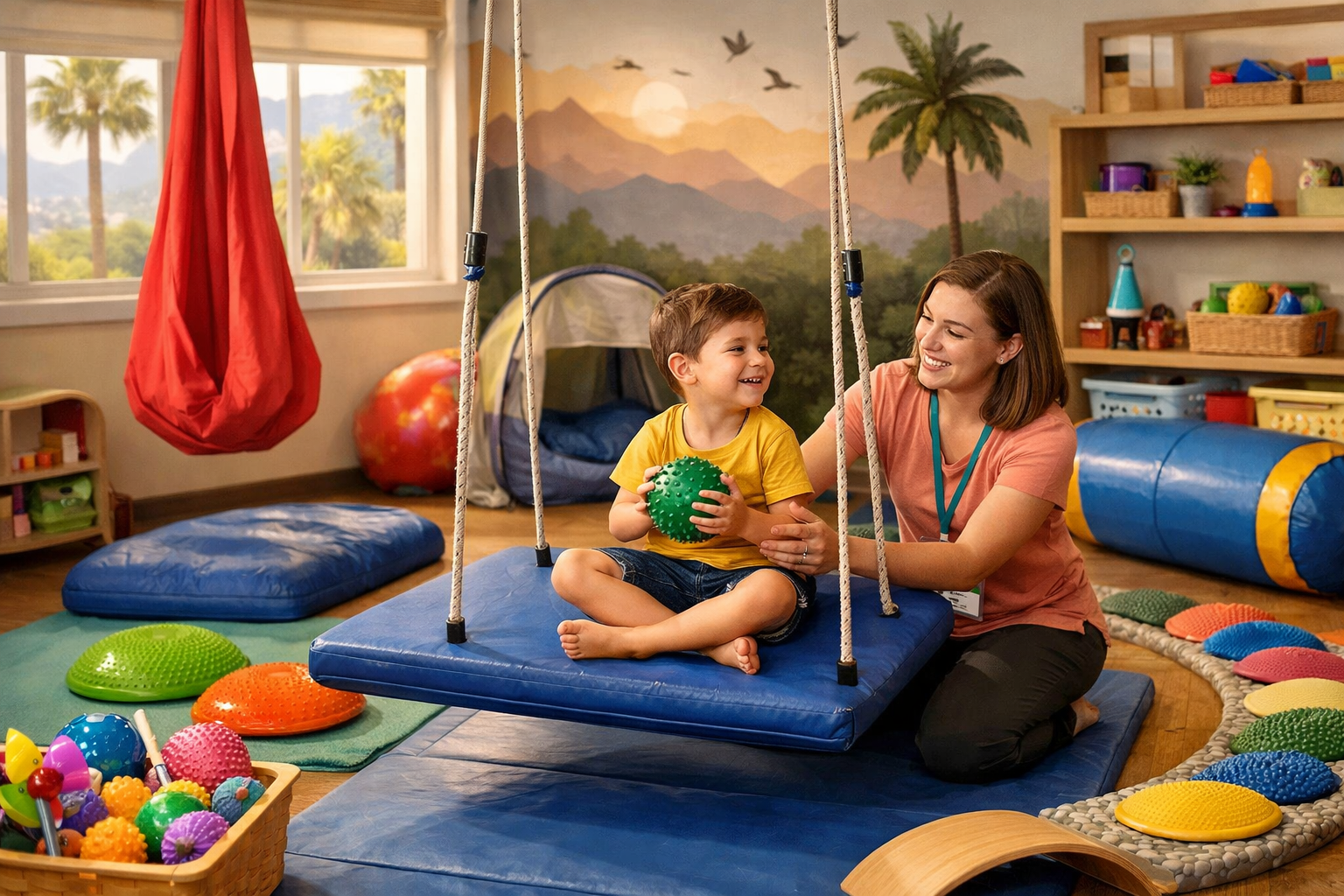
Helping Children Make Sense of the World Around Them
Does your child seem overwhelmed by everyday experiences like loud noises, bright lights, certain clothing textures, or even gentle touch? For many families, these reactions are not just temporary phases. They are signs of sensory processing challenges that can affect learning, behavior, emotional regulation, and social participation. When sensory input feels disorganized or intense, children may struggle to focus, communicate, or feel comfortable in their environment.
This is where sensory integration therapy California families rely on can make a meaningful difference. Rooted in occupational therapy, sensory integration therapy helps children learn how to process and respond to sensory information in a more organized and adaptive way. Rather than forcing children to tolerate discomfort, therapy supports the nervous system in developing more efficient pathways for understanding sensory input.
For families across California, access to sensory integration therapy can be life-changing. It offers practical strategies, individualized support, and measurable progress that extends beyond the clinic into daily routines. In this guide, we will explain what sensory integration therapy is, how it works, who it helps, and what families can expect throughout the process. You will gain clarity on benefits, techniques, and real-world outcomes so you can make informed decisions for your child’s development and well-being.
Understanding Sensory Integration Therapy and Its Purpose
Sensory integration therapy is a specialized approach within occupational therapy that focuses on how the brain receives, organizes, and responds to sensory input. Sensory information includes touch, movement, sound, sight, taste, smell, and internal body awareness such as balance and muscle position. When the brain has difficulty integrating these signals, everyday experiences can feel overwhelming, unpredictable, or distressing.
The purpose of sensory integration therapy is to improve the nervous system’s ability to process sensory input so the child can respond in a more functional and adaptive way. Instead of teaching isolated skills, therapy strengthens the underlying neurological foundations that support learning, self-regulation, and coordination.
This approach matters because sensory challenges often affect multiple areas of development at once. Difficulties with sensory processing can lead to challenges in attention, emotional regulation, motor planning, and social interaction. Without support, children may experience frustration, anxiety, or behavioral struggles that impact confidence and participation.
Key outcomes of sensory integration therapy include:
- Improved focus, attention, and emotional regulation
- Better balance, coordination, and body awareness
- Reduced sensory overload, avoidance, or defensive behaviors
- Increased independence in daily activities
- Greater participation at school, home, and in the community
A common misconception is that sensory integration therapy is only for children with autism. While it is widely used for autistic children, it also benefits children with ADHD, developmental delays, anxiety, and sensory processing disorder. Understanding this broad application helps families recognize when therapy may be appropriate.
How Sensory Integration Therapy Works in Practice
A Sensory-Rich Therapeutic Environment
Sensory integration therapy takes place in a carefully designed environment that provides controlled sensory input. Therapy spaces may include swings, climbing structures, balance beams, textured surfaces, weighted tools, and tactile materials. These tools are not random. Each element is selected to address specific sensory systems in a safe and purposeful way.
The goal is not to overstimulate the child but to offer structured sensory experiences that challenge the nervous system appropriately. Occupational therapists adjust activities based on the child’s responses, gradually helping the brain organize sensory input more efficiently. Sessions often feel playful and engaging, which reduces anxiety and encourages participation.
Child-Led, Goal-Oriented Engagement
A core principle of sensory integration therapy is following the child’s natural motivation. Therapists observe what interests the child and build therapeutic activities around those preferences. This approach supports intrinsic motivation, which is essential for neurological learning.
Although sessions are playful, they are also highly intentional. Therapists guide activities toward specific therapeutic goals such as improving balance, attention, or self-regulation. By allowing the child to lead within structured boundaries, therapy promotes confidence, independence, and sustained engagement.
The “Just-Right” Sensory Challenge
Effective therapy relies on providing the “just-right” challenge. Activities are designed to be slightly challenging without causing distress or shutdown. This balance encourages adaptation while maintaining emotional safety.
As the child succeeds, the therapist gradually increases complexity. Over time, the nervous system becomes more efficient at processing sensory input, leading to improvements in functional skills and daily routines.
Supporting Regulation and Self-Awareness
One of the most important goals of sensory integration therapy is regulation. Regulation refers to the ability to remain calm, alert, and organized. Through movement, pressure, and coordinated tasks, children learn how their bodies feel and how to adjust their responses.
These regulation skills often generalize beyond therapy sessions. Families frequently notice improvements in transitions, behavior, sleep, and emotional responses at home and school.
Occupational Therapy for Sensory Integration
Sensory integration therapy is delivered by a trained occupational therapist sensory specialist who has expertise in sensory processing and child development. Occupational therapy for sensory integration focuses on helping children participate more fully in daily activities by addressing sensory, motor, and regulatory challenges.
Occupational therapists assess how sensory processing affects a child’s ability to engage in meaningful activities such as dressing, eating, playing, learning, and socializing. Therapy goals are individualized and functional, meaning they connect directly to real-life needs.
For children with sensory processing disorder, families often search for occupational therapy for SPD or SPD occupational therapy services. In California, these services may be available through private clinics, early intervention programs, school-based therapy, or regional centers.
Who Benefits From Sensory Integration Therapy in California
Children who benefit from sensory integration therapy often display patterns of sensory sensitivity, avoidance, or seeking behaviors that interfere with daily life. These challenges vary widely, which is why individualized assessment and planning are essential.
Autism Spectrum Disorder
Sensory differences are a core feature of autism. Sensory integration therapy can help reduce sensory overload, improve regulation, and support participation in learning and social environments.
ADHD and Attention Challenges
Children with ADHD may struggle with body awareness, impulse control, and sustained attention. Sensory integration therapy can support sensorimotor integration, helping children regulate movement and attention more effectively.
Sensory Processing Disorder
Children with sensory processing disorder often benefit directly from targeted sensory integration approaches. Therapy addresses how the nervous system interprets sensory input rather than focusing only on behavior.
Developmental Delays and Anxiety
Children with developmental delays or anxiety related to sensory input may also benefit. Therapy can reduce avoidance behaviors and build confidence in navigating new environments.
In California, early identification is especially important. Families may begin the process with developmental screenings to identify sensory or developmental concerns early and access appropriate supports.
Early Intervention and Sensory Integration Therapy
For children under age three, early intervention services can play a critical role. California’s early intervention programs, including Early Start 0–3, often include occupational therapy services that address sensory processing challenges during key developmental windows.
Early support can significantly improve long-term outcomes. Children who receive sensory integration therapy early may develop stronger regulation, communication, and motor skills that support smoother transitions into preschool and school-based programs.
Families navigating early services often benefit from navigation services that help coordinate evaluations, referrals, and eligibility across systems.
Real-World Applications of Sensory Integration Therapy
Understanding how therapy translates into daily life helps families see its practical value.
School Participation
Many children show improved participation at school after sensory integration therapy. Families report better attention, improved tolerance for classroom noise, and fewer emotional outbursts. Teachers may notice improved sitting tolerance, task completion, and peer interaction.
Daily Living Skills
Sensory integration therapy often supports independence in daily routines such as dressing, bathing, eating, and grooming. Reduced sensory defensiveness can make these activities less stressful for both children and caregivers.
Emotional Regulation and Behavior
Children who once reacted intensely to frustration or transitions may learn calming strategies through sensory experiences. Over time, this builds emotional resilience and confidence.
Long-Term Planning and Transitions
For older children and adults with developmental disabilities, understanding sensory needs can be essential for successful transitions. Resources such as group homes for adults with developmental disabilities in California highlight how sensory considerations continue to matter beyond childhood.
Finding Sensory Integration Therapy Near You in California
Families often search online for sensory integration therapy near me, sensory processing therapy near me, or sensory integration near me. In California, services may be accessed through multiple pathways:
- Private occupational therapy clinics
- Early intervention programs
- School-based occupational therapy
- Regional centers
Families navigating eligibility and referrals may benefit from regional center intake assistance, which helps connect children and adults with appropriate services and supports.
Programs such as the Navigators to Leaders Program also empower families to understand systems, advocate effectively, and build long-term confidence.
Examples of Sensory Integration in Therapy
Many families ask for examples of sensory integration activities. These may include:
- Swinging or climbing to support balance and movement processing
- Deep pressure activities to support calming and body awareness
- Tactile play with different textures to reduce defensiveness
- Obstacle courses to improve motor planning and coordination
- Heavy work activities to support regulation and focus
Each activity is selected based on assessment and adjusted as the child progresses.
Best Practices and Common Mistakes to Avoid
Work With Qualified Professionals
Always seek services from a licensed occupational therapist trained in sensory integration. Proper assessment and individualized planning are essential.
Be Patient and Consistent
Progress takes time. Sensory integration therapy builds neurological foundations gradually. Consistency across weeks and months supports lasting change.
Reinforce Strategies at Home
Therapy is most effective when strategies are supported at home. Therapists often recommend simple routines or sensory tools that fit into daily life.
Avoid Overstimulation Without Guidance
More sensory input is not always better. Without professional guidance, excessive stimulation can overwhelm rather than help.
Focus on Functional Outcomes
Therapy should always connect back to meaningful daily activities. Avoid approaches that emphasize activities without clear functional goals.
Supporting Sensory Development With Confidence
Sensory integration therapy California families access offers children a structured, supportive way to make sense of their world. By strengthening how the brain processes sensory input, therapy supports emotional regulation, learning, movement, and everyday participation.
With early identification, professional guidance, and family involvement, children can build skills that help them thrive at home, in school, and in their communities. Families do not have to navigate this journey alone.
Organizations like Families United provide education, advocacy, and navigation support to help families access the right services at the right time. With the right resources, sensory integration therapy becomes not just a treatment, but a pathway to greater confidence and quality of life.
Frequently Asked Questions About Sensory Integration Therapy
What is sensory integration therapy used for?
It helps children who have difficulty processing sensory input such as sound, touch, or movement by supporting regulation, coordination, and daily functioning.
Is sensory integration therapy only for autism?
No. It also supports children with ADHD, sensory processing disorder, developmental delays, and anxiety related to sensory input.
How long does therapy take to show results?
Progress varies. Some families notice changes within months, while others see gradual improvement over time. Consistency is key.
Is sensory integration therapy available in California?
Yes. Services are available through occupational therapists, early intervention programs, schools, and regional centers across California.
Can parents support therapy at home?
Absolutely. Home-based sensory strategies recommended by therapists help reinforce progress made during sessions.