
What to Expect During Intellectual and Developmental Disabilities Assessments

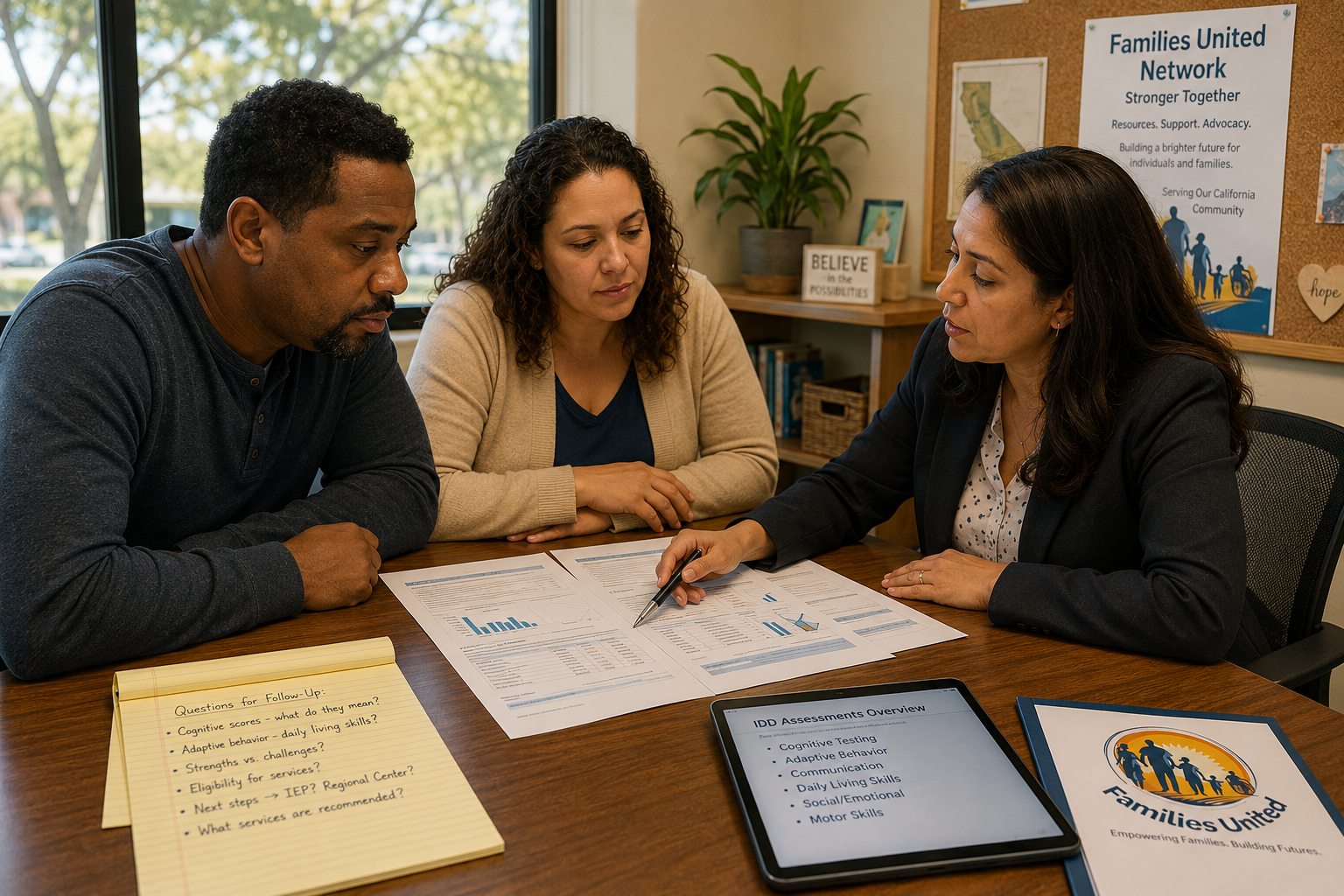
Intellectual and developmental disabilities assessments are comprehensive evaluations used to determine an individual’s cognitive strengths, adaptive skills, and eligibility for essential support services. For parents noticing that their child isn't meeting certain milestones, these idd assessments serve as the definitive roadmap to transition from a place of "watching and waiting" to a place of active, informed support.
Waiting for answers can feel like standing on the edge of a complex bureaucratic maze, where a child’s educational future and access to care hang in the balance. For many California families, these results are the key to unlocking Regional Center services or specialized school placements that ensure long-term stability. Understanding the difference between an intellectual vs learning disability during this process is vital to ensuring your child receives the specific type of help they need to thrive.
In this guide, you will learn exactly what happens during the evaluation, how to interpret the results, and how to use this information to advocate for your family’s rights. Let’s start by looking at how these assessments are structured.
The Purpose and Importance of Intellectual and Developmental Disabilities Assessments
Intellectual and developmental disabilities assessments are specialized evaluations designed to measure a person's cognitive functioning and their ability to handle daily life tasks, known as adaptive behavior. These evaluations go beyond a simple intellectual disability test; they involve a structured series of observations, interviews, and standardized activities conducted by licensed psychologists or specialists. The process objectively identifies how an individual learns, communicates, and interacts with the world, ensuring that any diagnosis is based on clinical data rather than guesswork.
For families, these assessments are the critical gateway to securing necessary protections and resources. Without formal intellectual and developmental disabilities assessments, a child may be denied access to specialized classroom settings, state funding, or therapeutic interventions. In California, these results are often the primary requirement for regional center intake assistance, making them essential for long-term financial and medical support. By obtaining a clear clinical picture, you move from a place of uncertainty to a position of strength, armed with the documentation needed to advocate for your child’s legal rights.
Undergoing this process offers several immediate benefits for your family’s future:
- Targeted Support: You receive a specific roadmap for therapy, focusing on actual needs rather than general delays.
- Legal Protections: A formal diagnosis provides the foundation for Individualized Education Programs (IEP) and workplace accommodations.
- Early Intervention: For younger children, starting with developmental screenings leads to faster access to "Early Start" services, which are proven to improve life-long outcomes.
A common misconception is that these tests only look for "low IQ." In reality, they evaluate a broad spectrum of abilities, helping parents distinguish between a specific learning challenge and a broader intellectual delay. Understanding the specific components of these evaluations is the next step in preparing your family.
Breakdown of the Evaluation: What Happens During IDD Assessments
The process of conducting intellectual and developmental disabilities assessments is designed to be a holistic look at an individual’s life, rather than just a single afternoon of testing. These idd assessments provide a structured environment where experts can observe how a child or adult processes information and navigates their physical world. For many, this is the first step toward accessing navigation services that help families manage the complex healthcare and educational systems in California.
Cognitive Testing: The Role of the IQ Test
The cognitive portion of the assessment often involves a standardized intellectual disability test. This typically includes an iq test for learning disabilities and intellectual functioning to measure reasoning, problem-solving, and verbal comprehension.
- Standardized Scales: Professionals use age-appropriate tools like the WISC (for children) or WAIS (for adults) to establish a baseline of cognitive ability.
- Interpreting Scores: It is important to remember that an IQ score is just one data point. In the context of an ids diagnosis, the score must be considered alongside how the individual actually functions in real-world settings.
- Misconception Alert: An IQ test alone cannot diagnose a disability; it must be paired with an adaptive behavior assessment to meet clinical standards.
Adaptive Behavior Evaluation
While cognitive tests measure potential, adaptive behavior scales measure how an individual actually applies their skills. This is a critical component of intellectual and developmental disabilities assessments because it looks at "life skills" across three main domains:
- Conceptual Skills: Understanding language, reading, writing, money, time, and number concepts.
- Social Skills: Interpersonal skills, social responsibility, self-esteem, gullibility, and the ability to follow rules/laws.
- Practical Skills: Activities of daily living (personal care), occupational skills, healthcare, travel/transportation, and safety.
By evaluating these areas, specialists can determine if there is a gap between what an individual can do and what they actually do in their daily environment. This distinction is often what qualifies an individual for early start 0-3 programs or regional center support.
Intellectual vs Learning Disability: Clarifying the Difference
A frequent source of confusion for parents is distinguishing between intellectual vs learning disability. While they may appear similar, their impact and the required support differ significantly:
- Intellectual Disability: Characterized by significant limitations in both intellectual functioning (reasoning, learning, problem-solving) and adaptive behavior. This typically affects a broad range of daily life activities.
- Learning Disability: Usually refers to specific challenges in one area, such as reading (dyslexia) or math (dyscalculia), while the person’s overall intellectual functioning remains average or above average.
Understanding this difference is vital when preparing for an IEP meeting, as the legal "labels" used in school will dictate the type of specialized instruction your child receives.
Identifying Severe and Profound Disabilities
In some cases, the assessment may reveal severe disabilities that require high-intensity, lifelong support. Historically, terms like profound mental retardation were used in clinical settings; however, modern medicine and the DSM-5 have replaced this with profound intellectual disability.
An individual with this diagnosis will generally require 24-hour care and assistance with all aspects of daily living. The assessment in these instances focuses heavily on non-verbal communication and physical health needs. Families facing these results often find that their navigators to leaders program experience is essential for moving from initial shock to becoming powerful, expert advocates for their loved one's specific medical and human rights.
By the end of the evaluation period, you should receive a written report that synthesizes all these findings into a clear path forward, helping you make the most informed decisions for your family's future.
Real-World Applications of Intellectual and Developmental Disabilities Assessments
Moving from the clinical testing room to daily life, intellectual and developmental disabilities assessments serve as a practical foundation for securing the "Style, Comfort, and Protection" of a stable support system. These real-world scenarios show how families use their results to bridge the gap between struggling in isolation and thriving with the right resources.
Use Case: Securing Early Intervention
A family noticed their two-year-old was not speaking or making eye contact, leading to significant anxiety about his future. They sought out idd assessments and utilized early start 0-3 services to pinpoint specific developmental delays. With a formal ids diagnosis in hand, they secured home-based speech and behavioral therapy, resulting in the child meeting his first major communication milestones within six months.
Use Case: Transitioning to Adult Services
As a teenager with severe disabilities approached high school graduation, his parents worried about his safety and long-term care. By updating his intellectual and developmental disabilities assessments, the family was able to document his continued need for high-level support. This clinical evidence allowed them to smoothly transition into adult day programs and specialized housing, ensuring his safety and quality of life remained uninterrupted after school ended.
Navigating the School System
In a classroom setting, a student was failing despite her best efforts because the school viewed her through the lens of a general learning challenge. A private evaluation clarified the intellectual vs learning disability distinction, allowing her parents to advocate for a more appropriate classroom placement.
These examples demonstrate that an assessment is not just a label; it is a powerful tool that transforms a family's ability to navigate complex systems with confidence.
Expert Tips for Navigating Intellectual and Developmental Disabilities Assessments
Understanding the mechanics of intellectual and developmental disabilities assessments is only half the battle; knowing how to manage the process effectively can drastically change the quality of support your family receives. These professional insights help you transform raw clinical data into a proactive plan for equity and inclusion.
- Document Daily Challenges in Advance Before the idd assessments begin, keep a "shadow log" for two weeks. Record specific instances where your child struggles with adaptive skills, such as social cues or personal safety. Providing these concrete, real-world examples to the evaluator ensures the final report reflects your child’s actual life, not just how they perform during a two-hour intellectual disability test.
- Request a Pre-Evaluation Consultation Don't go into the appointment blind. Ask the specialist for a brief call to explain the specific tools they will use, such as which iq test for learning disabilities is planned. This allows you to prepare your child for the environment and helps you understand if the evaluator has experience with culturally responsive care or specific severe disabilities.
- Leverage Professional Advocacy Support The paperwork following intellectual and developmental disabilities assessments can be overwhelming and filled with jargon. Working with a specialist through navigation services can help you "translate" the clinical findings into actionable goals for school meetings. An advocate ensures that the "fine print" of a diagnosis leads to the specific classroom modifications your child is legally entitled to.
Applying these best practices ensures that the assessment process remains a tool for empowerment rather than a source of stress, leading to more accurate results and better long-term outcomes for your family.
Moving Forward After Your Intellectual and Developmental Disabilities Assessments
Completing intellectual and developmental disabilities assessments is a major milestone that transforms clinical data into a roadmap for your family’s future. You now understand how idd assessments evaluate both cognitive potential and adaptive life skills, providing the objective evidence needed to secure essential services. With this clarity, you can confidently distinguish between various support needs and begin the process of building a robust, long-term safety net.
Taking the next step immediately is vital to ensuring your child or loved one doesn't miss out on time-sensitive interventions that drive better developmental outcomes. Armed with a formal evaluation, you have the authority to move from a state of waiting to a state of leading, securing the equitable access to education and community care your family deserves.
If you have your assessment results or are ready to begin the evaluation process, let us help you turn that information into high-impact advocacy. Contact us today for regional center intake assistance to ensure your family successfully navigates the path to comprehensive support and lifelong stability.
Frequently Asked Questions About Intellectual and Developmental Disabilities Assessments
What is the main difference between an intellectual vs learning disability?
An intellectual disability involves a broad limitation in both cognitive functioning and the adaptive skills needed for daily life. In contrast, a learning disability usually affects a specific academic area, such as reading or math, while the individual’s overall intelligence remains average or higher. Intellectual and developmental disabilities assessments are designed to differentiate between these two, ensuring that a child receives either specialized classroom modifications or broader developmental support.
Is an IQ test for learning disabilities enough for a diagnosis?
No, a standardized iq test for learning disabilities or cognitive function is only one part of the process. For a formal ids diagnosis, specialists must also evaluate "adaptive behavior," which measures how well a person handles daily tasks like communication and self-care. Intellectual and developmental disabilities assessments combine these scores to create a complete profile, ensuring the diagnosis accurately reflects the individual’s real-world needs and capabilities.
How can I help my child prepare for idd assessments?
The best way to prepare for idd assessments is to maintain a calm, normal routine so the evaluator sees your child’s typical behavior. You can explain that they will be playing games or solving puzzles with a teacher to help the school learn how they think. If you are feeling overwhelmed by the paperwork, participating in a navigators to leaders program can give you the confidence and community support needed to manage the clinical process effectively.
What happens if the results show severe disabilities?
If an assessment identifies severe disabilities or a profound intellectual disability, it signifies that the individual requires high levels of daily support and specialized medical or educational care. While these results can be difficult to process, they are the essential legal documentation required to secure 24-hour care, specialized housing, and maximum state funding. These findings serve as a protective shield, ensuring your loved one’s rights and safety are prioritized for life.