
Developmental Disabilities Services in the U.S.: Public, Private, and Community-Based Options

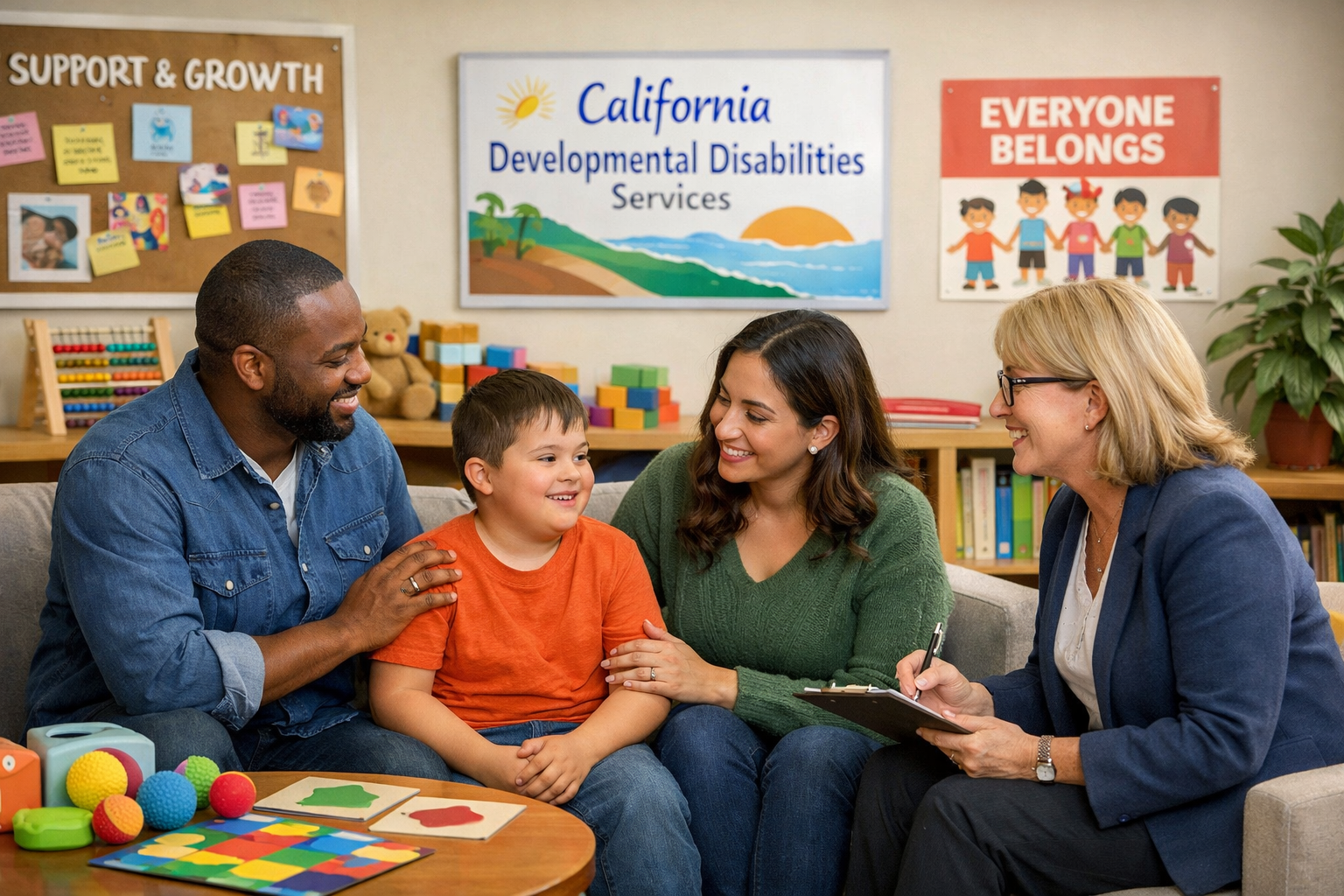
How Developmental Disabilities Services Support Children and Families
When a child experiences developmental delays, families are often left navigating unfamiliar systems, new terminology, and critical decisions. Understanding developmental disabilities services can make the difference between feeling overwhelmed and feeling empowered. These services exist to support children and adults with physical, cognitive, communication, behavioral, or social challenges that begin early in life and affect daily functioning.
In the United States, developmental disabilities services include public programs, private providers, and nonprofit community organizations. In California, families have access to one of the most comprehensive support systems in the country, including state-funded regional centers, early intervention programs, and family advocacy networks. However, knowing where to start is often the hardest part.
This guide explains how developmental disabilities services work, who provides them, how eligibility is determined, and how families can build a coordinated care plan that truly meets their needs.
What Are Developmental Disabilities Services?
Developmental disabilities services are structured supports designed to help individuals reach their fullest potential across learning, communication, mobility, behavior, and independent living skills. These services adapt over time based on age, diagnosis, and personal goals.
They may include:
- Early intervention California programs for infants and toddlers
- School-based special education services
- Regional center services California families rely on
- Supported living services for adults
- Behavioral and therapeutic supports
- Care coordination and advocacy assistance
These services matter because early and consistent intervention significantly improves long-term outcomes. Children who receive timely support often show gains in communication, emotional regulation, independence, and academic readiness.
Families benefit too. Developmental disabilities services provide guidance, education, and system navigation, helping reduce stress while increasing confidence.
A common misconception is that services are only available after a formal diagnosis. In reality, many California programs provide support based on developmental concerns alone.
The Role of the Department of Developmental Services in California
In California, many services are coordinated through the California Department of Developmental Services. This state agency oversees a network of nonprofit regional centers that provide lifelong support to eligible individuals with developmental disabilities.
The department ensures access to:
- Early intervention services
- Case management and service coordination
- Self Determination Program California options
- Supported living services
- Community integration programs
Understanding how the department operates helps families identify where services originate and how funding flows through the system.
Regional Center Services in California
One of the most important components of developmental disabilities services in California is the regional center system. Regional centers are nonprofit agencies contracted by the state to provide case management and coordinate services for eligible individuals.
Families often search for a list of California regional centers to determine which center serves their county. Each regional center covers a specific geographic area and assigns a service coordinator to eligible individuals.
Regional center services California families may receive include:
- Individualized program planning
- Service coordination
- Behavioral supports
- Respite care
- Family home agency providers
- Supported living services
- Transition services into adulthood
For families beginning the intake process, regional center intake assistance can provide step-by-step guidance.
Early Intervention and the California Early Start Program
Early identification changes outcomes. California’s early intervention California system, known as the California Early Start Program, supports infants and toddlers from birth to age three who show developmental delays or have qualifying conditions.
Families can begin by requesting developmental screenings to identify areas of concern.
If eligible, children may receive:
- Speech therapy
- Occupational therapy
- Physical therapy
- Behavioral support
- Family coaching
The Early Start 0–3 program emphasizes parent involvement, ensuring strategies are used consistently at home.
Early support can reduce the need for more intensive services later and helps families understand their child’s strengths and needs from the beginning.
School-Based Services and Behavioral Support
Once children reach age three, services often transition into the school system. Public schools provide special education and related services under federal law.
These may include:
- Individualized Education Programs (IEPs)
- Speech and language therapy
- Behavioral interventionist support
- Autism behavioral therapy
- Social skills instruction
Families may encounter terms such as qualified intellectual disabilities professional or QIDP certification in certain residential or community-based settings. A Qualified Intellectual Disabilities Professional is responsible for overseeing individualized plans and ensuring appropriate service delivery in specific care environments.
For children who need additional support with peer interaction and emotional development, resources like social skills training in California can supplement school-based services.
The Self Determination Program in California
The Self Determination Program California families may consider is an alternative service model that allows participants greater control over their budgets and service providers.
Instead of relying solely on traditional regional center vendor services, participants can:
- Choose their own service providers
- Develop individualized budgets
- Design flexible support plans
- Hire community-based supports
This model promotes independence and personalization, especially for adults seeking greater autonomy.
Families interested in this pathway often benefit from navigation services to understand program requirements and budgeting responsibilities.
Supported Living Services and Adult Supports
As children grow into adulthood, developmental disabilities services shift toward independence and community integration.
Supported living services help adults with developmental disabilities live in their own homes or apartments while receiving assistance with:
- Daily living skills
- Budgeting and employment
- Transportation
- Community participation
Family home agency providers may offer alternative living arrangements for individuals who benefit from structured support within a family-style environment.
Transition planning typically begins during adolescence and requires coordination between schools, regional centers, and families.
Programs like Navigators to Leaders help families build leadership and advocacy skills throughout this transition process.
Public, Private, and Community-Based Services Working Together
Developmental disabilities services are most effective when systems work collaboratively.
Public Programs
Public programs include:
- Regional center services
- Early intervention California programs
- Special education
- State-funded supports
These services provide foundational access and are often available at low or no cost.
Private Therapy Providers
Private providers may offer:
- Behavioral therapy
- Speech therapy
- Occupational therapy
- Psychological evaluations
Families sometimes pursue private services to reduce wait times or access specialized expertise.
Community-Based Organizations
Community nonprofits bridge the gap between formal systems and everyday family life. Families United helps families understand eligibility, prepare for meetings, and navigate complex service systems.
Community organizations often provide culturally responsive support and practical education not found in formal systems.
Best Practices for Navigating Developmental Disabilities Services
Successfully navigating developmental disabilities services requires preparation and persistence.
Start Early
Do not wait for a formal diagnosis if you notice delays. Early documentation and screenings help accelerate access to support.
Understand Eligibility
Each program has its own eligibility criteria. Learn the timelines and documentation requirements to avoid delays.
Coordinate Across Providers
Sharing goals among therapists, schools, and regional center coordinators ensures consistency.
Build Advocacy Skills
Parent advocacy plays a major role in service quality. Leadership programs and nonprofit support can strengthen your voice.
Keep Records
Maintain copies of evaluations, service plans, and communication logs. Organized records support smoother transitions.
Common Questions Families Ask
Who qualifies for developmental disabilities services in California?
Eligibility varies by program. Regional centers typically require a qualifying developmental disability that began before age 18. Early intervention programs may only require evidence of developmental delay.
Are developmental disabilities services free?
Many public services are low-cost or free. Some programs may use insurance or sliding-scale fees.
What is a qualified intellectual disabilities professional?
A qualified intellectual disabilities professional is a trained specialist responsible for overseeing individualized care plans in certain residential or clinical settings.
What is QIDP certification?
QIDP certification verifies that a professional meets state and federal qualifications to coordinate services for individuals with intellectual and developmental disabilities.
Can families combine public and private services?
Yes. Many families use regional center services alongside private therapy to meet specific goals.
Bringing It All Together
Developmental disabilities services form a network of public, private, and community-based supports designed to help individuals thrive from infancy through adulthood.
In California, families benefit from:
- State oversight through the California Department of Developmental Services
- Regional center services California residents can access locally
- Early intervention California programs for young children
- Supported living services for adults
- Advocacy and navigation support through nonprofit organizations
When families understand how these systems connect, they move from confusion to confidence. The right combination of services creates a coordinated care plan that supports not only the child but the entire family.
Taking the first step, whether through a screening, a referral, or a conversation with a trusted nonprofit, can open the door to meaningful, long-term support.