
Physical Therapy for Developmental Disabilities

Why Physical Therapy Plays a Critical Role in Development
When a child struggles with movement, balance, or coordination, the impact reaches far beyond physical skills. Sitting upright, crawling, walking, playing with peers, and participating in school routines all depend on the body’s ability to move efficiently and confidently. For children with developmental disabilities, physical therapy for developmental disabilities in California plays a vital role in building not only physical abilities, but also confidence, independence, and quality of life.
Physical therapy helps children develop the strength, coordination, posture, and motor planning skills they need to engage with their world. Early and consistent support can significantly influence long-term outcomes, particularly during the early years when the brain and body are most adaptable.
For families, understanding when physical therapy is appropriate, what pediatric physical therapy actually involves, and how to access services in California can feel overwhelming. This guide explains how physical therapy supports children with developmental disabilities, what conditions it addresses, and how families can take clear next steps within California’s early intervention and educational systems.
Let’s begin by clarifying what physical therapy supports in child development and why it matters so much.
What Physical Therapy Supports in Developmental Disabilities
Physical therapy for children focuses on gross motor development, which includes large-scale movements and postural control. These skills are the foundation for independence and participation in daily life.
Pediatric physical therapy commonly supports:
- Muscle strength and endurance
- Balance and coordination
- Posture and body alignment
- Motor planning and body awareness
- Mobility skills such as crawling, walking, and stair navigation
Children with developmental disabilities may experience low muscle tone, high muscle tone, joint stiffness, poor balance, delayed motor milestones, or difficulty transitioning between positions such as sitting to standing. A pediatric physical therapist evaluates how a child moves in real-world situations and designs interventions that improve functional abilities rather than isolated exercises.
In California, physical therapy pediatrics often works alongside pediatric occupational therapy, speech therapy, and educational services. This collaborative approach ensures physical goals support broader developmental, communication, and learning outcomes.
The ultimate goal is not to make movement look typical, but to make it functional, safe, and meaningful for the child’s daily life.
Common Developmental Disabilities Supported by Physical Therapy
Physical therapy special needs services are highly individualized. Rather than focusing on a diagnosis alone, therapists look at how a child’s movement challenges affect daily activities.
Children who commonly benefit from physical therapy include those with:
- Cerebral palsy
- Down syndrome
- Autism spectrum disorder
- Genetic or chromosomal conditions
- Global developmental delays
- Premature birth or low birth weight
- Neuromuscular conditions
- Motor planning and coordination challenges
Some children qualify for services even without a formal diagnosis. Developmental concerns such as delayed sitting, crawling, or walking may be enough to warrant evaluation and support, particularly through early intervention programs.
In many cases, physical therapy addresses secondary challenges, such as muscle weakness or joint tightness, that accompany a diagnosis. Addressing these early can prevent pain, fatigue, and movement limitations later in childhood.
What Is Pediatric Physical Therapy and How It Works
Parents often ask, what is pediatric PT and how it differs from adult physical therapy. Pediatric physical therapy is designed specifically for infants, toddlers, children, and adolescents whose bodies and brains are still developing.
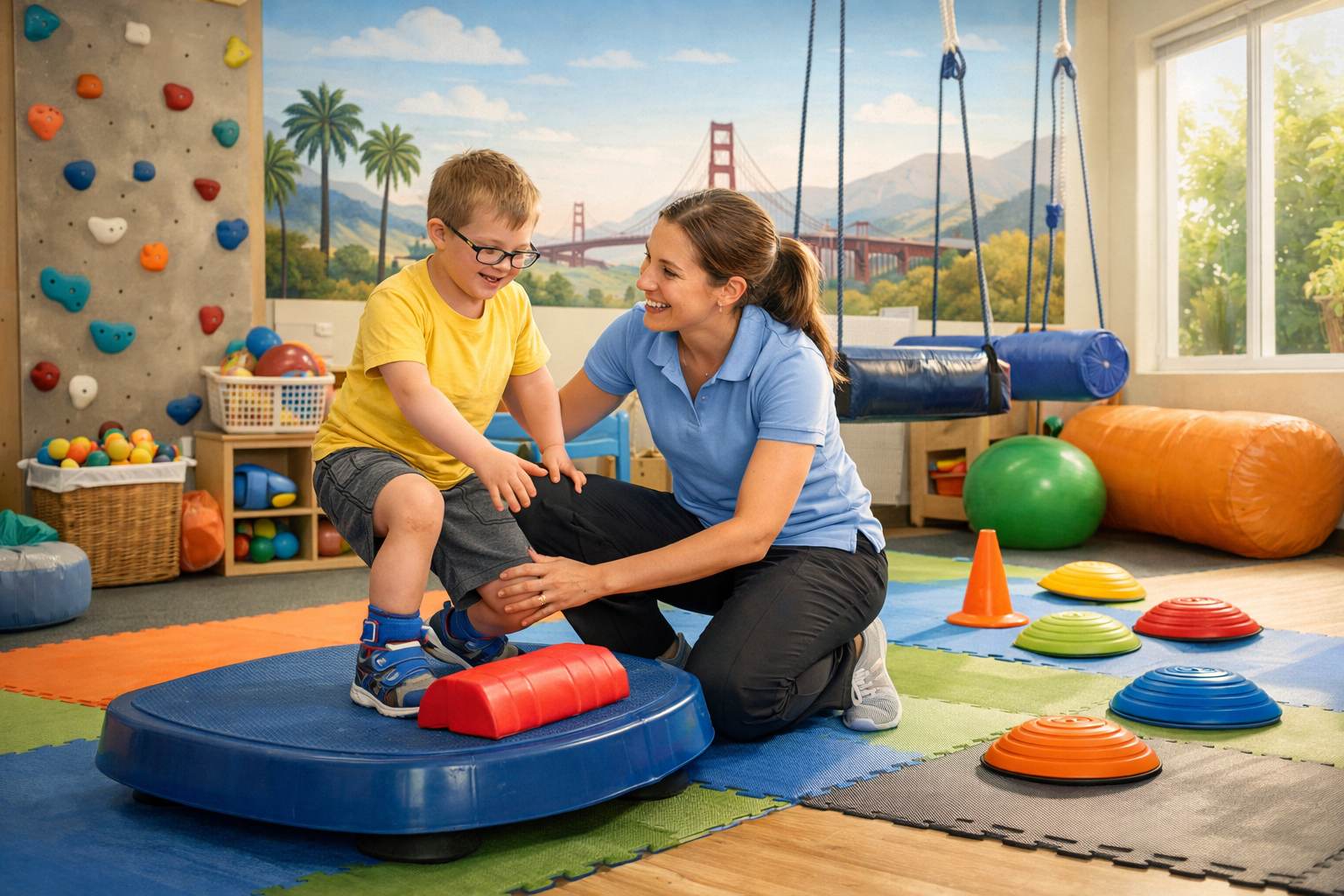
Therapy sessions are typically play-based and engaging. For young children, therapy may look like games, obstacle courses, or guided movement activities that target specific skills while keeping the child motivated.
A physical therapist for kids may work on:
- Sitting balance and trunk control
- Crawling, standing, and walking
- Jumping, running, and climbing
- Balance reactions and coordination
- Functional skills like getting on and off chairs or playground equipment
Therapy settings vary and may include homes, clinics, schools, or community spaces. For infants and toddlers, services are often delivered in natural environments so skills can be practiced in everyday routines.
Family involvement is essential. Therapists regularly coach caregivers on activities they can use between sessions, reinforcing progress and building confidence.
How Physical Therapy Supports Daily Life and Independence
Physical therapy is not about achieving perfection in movement. It is about enabling children to participate in everyday activities with greater ease and independence.
For a young child, this may mean sitting independently to play or moving across the floor to explore. For a school-age child, it may involve keeping up with peers on the playground, transitioning between classrooms safely, or maintaining posture during classroom activities.
Over time, physical therapy can help:
- Reduce frustration related to movement challenges
- Improve participation in school and community activities
- Build confidence and self-esteem
- Prevent secondary issues such as pain or fatigue
These outcomes are especially meaningful for children with developmental disabilities, where movement challenges can otherwise limit opportunities for social interaction and learning.
Early Intervention and Physical Therapy in California
California offers several pathways for accessing physical therapy for developmental disabilities, depending on a child’s age and needs.
Birth to Age Three: Early Start Services
Children under age three may qualify for early intervention through the Early Start program. Early Start provides services for infants and toddlers with developmental delays or established conditions that may lead to delays.
Physical therapy services under Early Start are guided by an Individualized Family Service Plan. Therapy focuses on supporting development within daily routines and empowering families with strategies they can use at home.
If concerns exist, families are encouraged to pursue developmental screenings as early as possible. Early identification allows services to begin during critical developmental windows.
Age Three and Older: School-Based Services
Preschool and school-age children may receive physical therapy through their local school district if services are necessary for educational access. In these cases, therapy is included in an Individualized Education Program.
School-based therapy focuses on supporting access to learning environments, such as navigating the classroom, playground, or school campus safely and independently.
Additional Support and Navigation
Navigating multiple systems can be confusing. Families often benefit from navigation services that help clarify eligibility, coordinate evaluations, and understand rights and options across healthcare and education systems.
Some families also seek regional center intake assistance when developmental disabilities are suspected or diagnosed, especially for ongoing or long-term support needs.
How Physical Therapy Differs From Occupational Therapy
Parents frequently ask about the difference between physical therapy and pediatric occupational therapy. While both support development, their focus areas are distinct and complementary.
Physical therapy primarily addresses:
- Large body movements
- Balance, posture, and mobility
- Strength and endurance
Pediatric occupational therapy focuses more on:
- Fine motor skills such as grasping and writing
- Daily living skills like feeding and dressing
- Sensory processing and self-regulation
Many children benefit from both therapies working together. Collaboration ensures that gains in movement support independence in daily activities and learning environments.
Signs Your Child May Need Physical Therapy
Parents often wonder, does my child need physical therapy or if delays will resolve on their own. While every child develops at their own pace, certain signs suggest an evaluation may be helpful.
Possible indicators include:
- Delayed sitting, crawling, or walking
- Frequent falls or poor balance
- Difficulty transitioning between positions
- Low muscle tone or stiffness
- Avoidance of movement or physical play
- Fatigue during everyday activities
Trusting your instincts is important. If concerns persist across environments or over time, seeking an evaluation can provide clarity and reassurance.
Real-World Examples of Physical Therapy Impact
Understanding how physical therapy works in everyday life can make the benefits more tangible.
Early mobility support
A toddler shows delayed walking and poor balance. Early physical therapy focuses on strength and postural control, leading to independent walking and increased confidence within months.
School-age participation
A child struggles with playground activities and classroom transitions. Physical therapy improves coordination and endurance, allowing fuller participation with peers.
Long-term developmental support
A family works with therapists over several years, adjusting goals as their child grows to support independence, safety, and quality of life.
These examples highlight how therapy evolves alongside a child’s development.
Best Practices and Common Misunderstandings
Understanding what physical therapy can and cannot do helps families set realistic expectations.
Start early whenever possible. Early support often leads to stronger outcomes.
Progress is individual. Growth may be gradual and non-linear.
Therapy supports function, not perfection. Goals focus on meaningful participation.
Family involvement matters. Practice outside sessions reinforces progress.
Physical therapy is a supportive tool, not a cure. Its value lies in improving how children engage with their world.
Supporting Development Beyond Physical Therapy
Physical development is closely linked to cognitive, social, and emotional growth. Many families combine physical therapy with activities that strengthen thinking and problem-solving skills.
Resources such as cognitive brain exercises for children in California can complement physical therapy by supporting attention, planning, and learning skills.
Holistic support ensures children are not only moving better, but also building confidence and independence across all areas of development.
Final Thoughts on Physical Therapy for Developmental Disabilities
Physical therapy for developmental disabilities in California is about creating opportunities for movement, independence, and participation. With the right support, children can build skills that help them navigate daily life with greater confidence and comfort.
For California families, understanding available services and pathways makes the process more manageable. With early awareness, coordinated care, and informed advocacy, physical therapy becomes a powerful part of a child’s developmental support system.
The most important step is asking questions and seeking guidance. Early action opens the door to progress and possibility.
Frequently Asked Questions
What does physical therapy help with developmental disabilities?
It supports strength, balance, coordination, posture, and functional mobility needed for daily activities.
At what age can a child start physical therapy?
Children can begin physical therapy in infancy if developmental concerns are identified early.
Is physical therapy covered in California?
Coverage varies. Early intervention and school-based services may be available at low or no cost.
Do children need a diagnosis to receive physical therapy?
Not always. Developmental delays alone may qualify a child for evaluation and services.
How long does physical therapy last?
Duration depends on the child’s needs and progress. Therapy plans are adjusted over time.